

In the present world beyond academics, parents consider other factors when selecting the school. A safe place that respects and encourages children to feel safe is also crucial. A comprehensive school safety plan can keep your students protected, as well as allow them to learn, engage and gain valuable life skills.
The overall school climate today speaks much more to the aspect of school safety for students beyond the supervision of school personnel in the classroom. This involves physical security, emotional health, digital safety, health and hygiene, emergency preparedness, and robust partnerships among schools and families. Schools which implement full school safety and security guidelines provide a secure school environment for children to learn without excessive concerns.
Every aspect of student safety takes part in their school life from having good policies to teaching them correctly to ensuring their safety by having good staff and infrastructure.
Why Is School Safety in 2026 More Important Than Ever?
A child's time in school accounts for almost a third of their time everyday. Modern school safety guidelines place a greater emphasis on cultivating a balanced ecosystem to ensure student safety across multiple facets physical, emotional and digital.
Today's school safety is enhanced by the following:
- 1. Physical safety
- 2. Emotional well-being
- 3. Mental health support
- 4. Digital safety
- 5. Hygiene and health
- 6. Safe transportation
- 7. Emergency preparedness
In a school which is truly safe, students can concentrate on learning, not on worrying about what is happening in the school.
School Safety in 2026
Educational safety is a constantly planned, aware and responsible process. DPS Nagpur's students' safety is enhanced by multiple levels of care and supervision.
1. Secure Campus with Controlled Entry
Safe School Sites is the first step to safeguard students.
Best CBSE School in Nagpur implements:
- 1. Visitor verification
- 2. Controlled access points
- 3. Security personnel
- 4. Student identification systems
- 5. Regular monitoring of school premises
These help to ensure only the appropriate people are admitted to the campus.
2. CCTV Surveillance for Better Monitoring
The CCTV cameras are located strategically which monitors important areas on the school's campus.
Benefits include:
- 1. Improved supervision
- 2. Effective response in incidents.
- 3. Enhanced student safety
- 4. Better security management
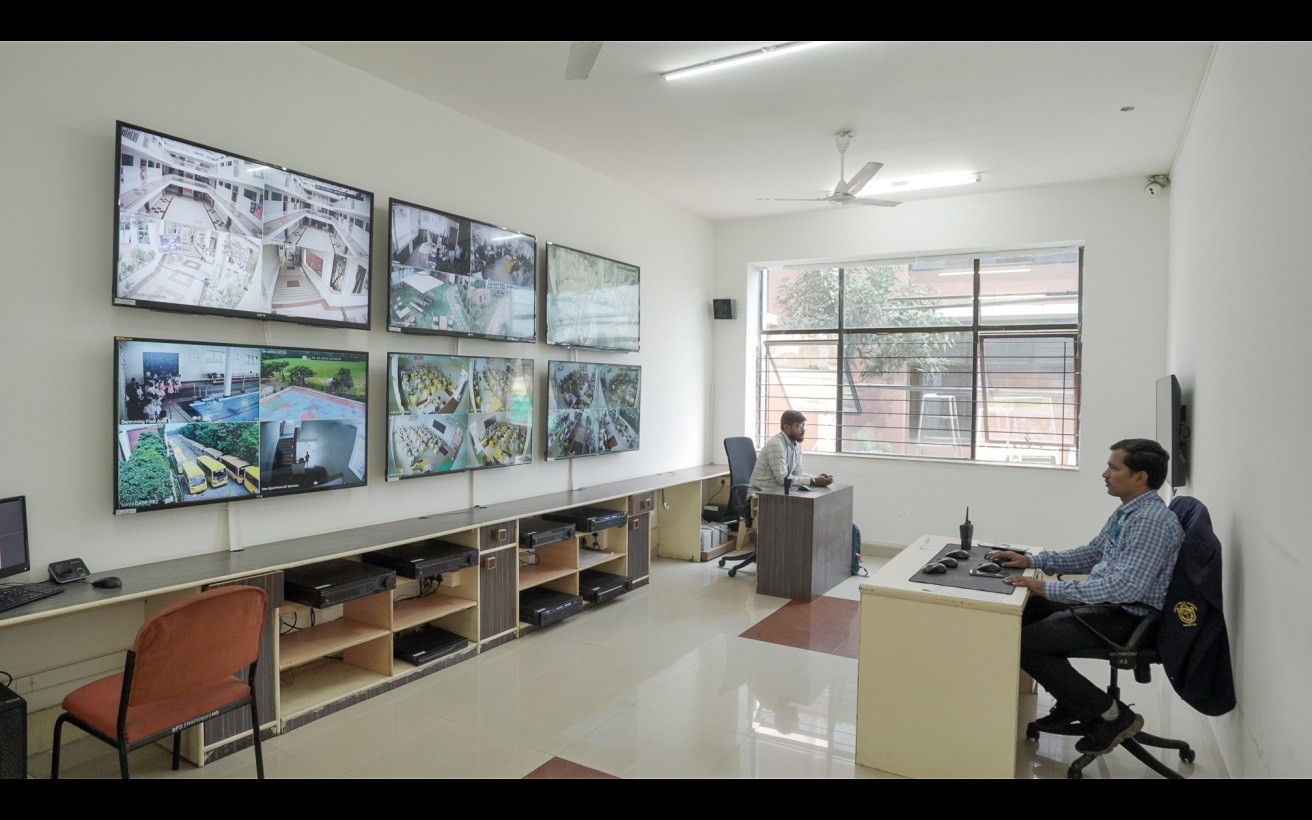
Technologies help to ensure students remain safe and protected with regard to privacy
2. CCTV Surveillance for Better Monitoring
School buses are generally first and last point of contact during a student's day.
A safety transport system emphasises on:
- 1. Trained drivers
- 2. Verified support staff
- 3. Regular vehicle maintenance
- 4. Safe boarding and drop-off procedures
- 5. Parent communication regarding transport
Student safety extends beyond the classroom.
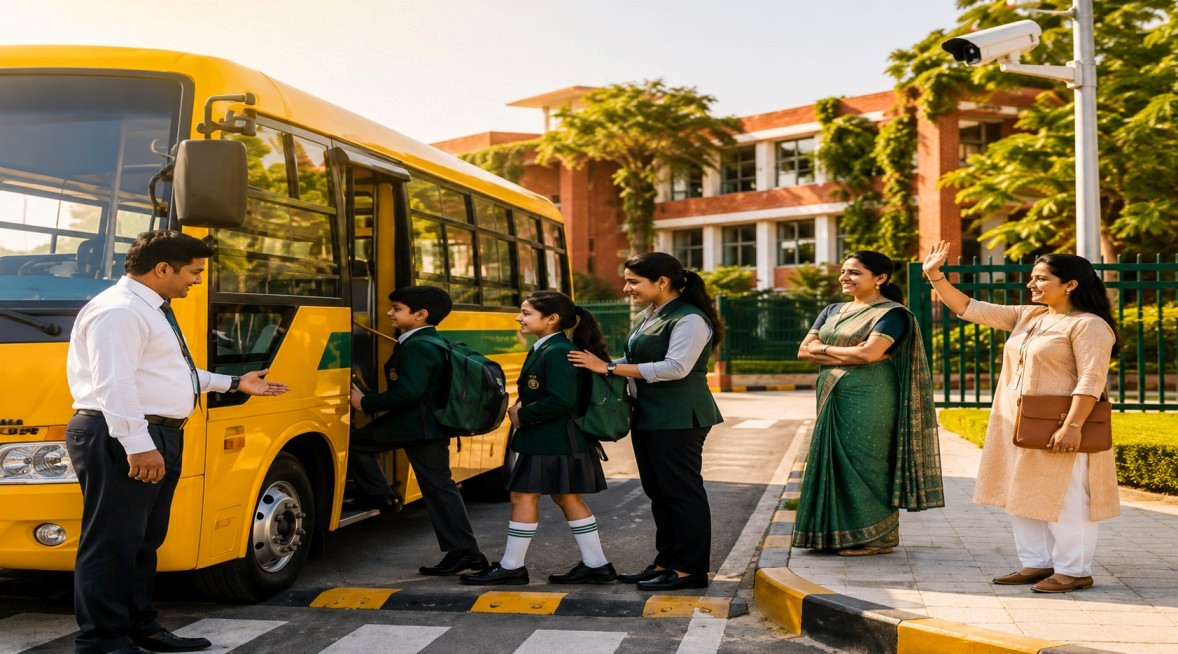
To learn more about our safe school bus transportation facility, including transport routes, safety guidelines, and bus rules, visit our dedicated transport page.
4. A Well-Planned School Safety Plan
In an emergency, being prepared can help.
Schools regularly conduct:
- 1. Fire safety drills
- 2. Evacuation exercises
- 3. Disaster management awareness
- 4. Emergency response training
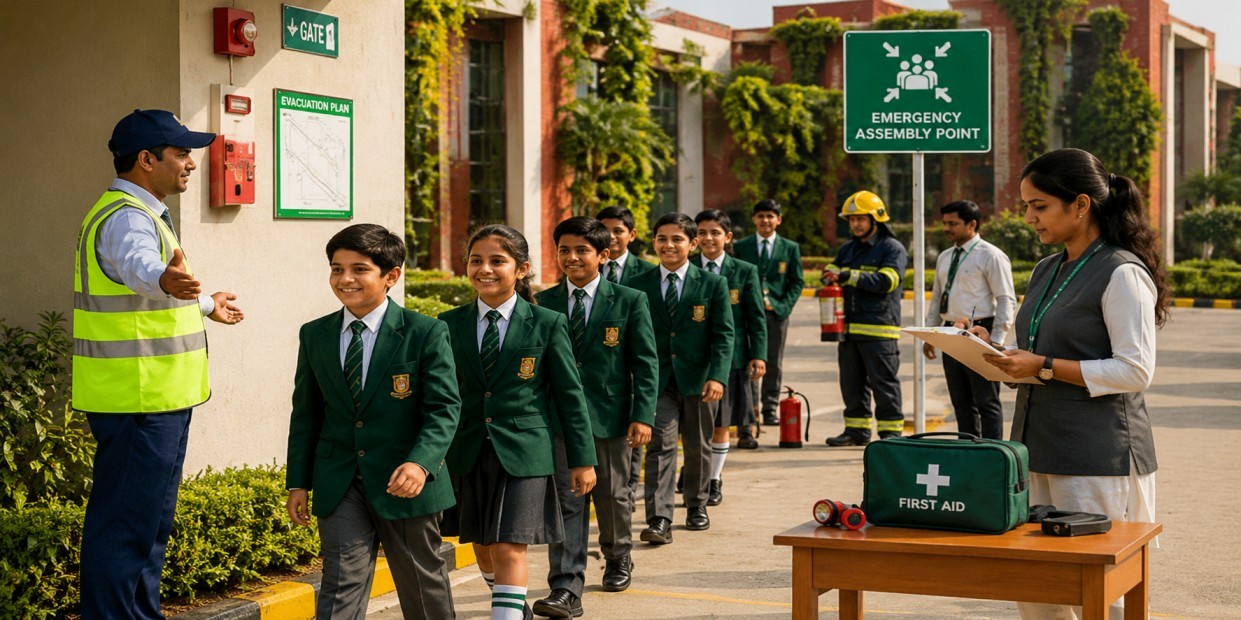
Students are now quite safe with safety procedures.
5. Health and Hygiene
Healthy students are equal to better learning.
Good schools promote:
- 1. Clean classrooms
- 2. Safe drinking water
- 3. Sanitized washrooms
- 4. Medical assistance
- 5. First-aid facilities
- 6. Regular health awareness programs
Hygiene among students and the awareness of the same is important in the prevention of spreading infections during monsoons.
6. Emotional Safety Is Just as Important
Children should feel safe emotionally in their learning.
Schools encourage:
- 1. Respectful communication
- 2. Positive classroom culture
- 3. Student counselling
- 4. Teacher support
- 5. Inclusive learning environments
A student managing his or her emotions would be more effective in the classroom academically and socially.
7. Anti-Bullying and Good School Culture
All children should be accepted.
Schools actively promote:
- 1. Kindness
- 2. Inclusion
- 3. Respect
- 4. Responsible behaviour
- 5. Conflict resolution
Early intervention is for creating a positive school experience for all students
8. Cyber Safety in the Digital Age
Digital safety is a priority as technology is integral to educational experiences.
A student's learning is guided to be:
- 1. Protect personal information
- 2. Use the Internet safely
- 3. Recognize online risks
- 4. Follow safety measures while using internet
Digital Literacy is a key life skill in today’s era.
9. Strong Parent-School Communication
Parents and schools are hand in hand partners.
Effective communication includes:
- 1. Regular updates
- 2. Parent meetings
- 3. Academic progress reports
- 4. Emergency notifications
- 5. Open communication channels
Good teamwork leads to improved trust and student achievement.
10. Building Responsible Citizens Through School Discipline
Students learn to:
- 1. Respect others
- 2. Follow rules
- 3. Be punctual
- 4. Develop self-control
- 5. Take responsibility for their actions
These rules are designed to help students become prepared for life after school.
School Safety Rules Every Student Should Follow
Simple and easy school safety rules create a safe, respectful and positive school environment.
Students should:
- 1. Follow teachers' instructions.
- 2. Report unsafe situations immediately.
- 3. Treat peers with respect, and don't bully peers.
- 4. Utilise digital devices in a responsible way.
- 5. Observe and follow lab and sports safety procedures.
- 6. Do not go beyond school boundaries.
What Parents Should Look for When Choosing a Safe School?
Before choosing a school for the children, parents should think about:
- ✔ Secure campus
- ✔ Qualified teaching staff
- ✔ Safety-trained personnel
- ✔ Reliable transport facilities
- ✔ Medical support
- ✔ Emergency preparedness
- ✔ Anti-bullying initiatives
- ✔ Parent communication
- ✔ Hygienic and clean infrastructure
A safe school is a place where children feel safe and cared for.
Students learn and grow in a secure, modern environment supported by our world-class school infrastructure, featuring advanced laboratories, a well-equipped library, sports facilities, activity rooms, and smart learning spaces.
Principal's Message
"At DPS, Nagpur, 'Student Safety' is the basis of meaningful learning and all efforts will be made to create a safe, inclusive and caring environment where students will feel confident and safe to learn, explore and grow. All efforts will be made with the assistance of support staff and in collaboration with parents as well." — Principal, DPS Kamptee Road Nagpur
A Message from the School
DPS Kamptee Road, Nagpur strives to create a safe environment for the children where they can learn and develop happily. The school implements health protocols, safety measures and protocols to keep the school campus safe. This empowers our students to flourish with confidence and a peaceful mind.
Conclusion
Safe school is the basis for life-long learning and building a responsible citizen. A secure, inclusive and caring environment is best for strong academics
Schools can impart children the confidence to explore, learn and grow by implementing a comprehensive school safety plan, adhering to school safety guidelines and promoting collaboration among parents, teachers and students.
Safety is a continuous pledge which is reflected in the health and wellbeing of all students at DPS Nagpur and contributes to their future learning and achievement.
📖 Read More: Want to help your child build confidence, resilience, and essential life skills? Explore our guide on Child’s Personal Growth: A Parent’s Guide to Self-Improvement and discover practical ways parents can support their child's overall development at every stage.
Frequently Asked Questions
1. Why is school safety important for students?
School safety contributes to a secure school atmosphere that allows students to learn, engage in class activities and grow emotionally and socially.
2. What are the important school safety measures in 2026?
In the present time, secure access to the campus, CCTV surveillance, trained staff, emergency preparedness, first-aid, safe school transportation safety, cyber safety education and anti-bullying programmes are the important school safety measures in 2026.
3. What are ways for parents to help with school safety?
Parents can reinforce rules at home, remain in constant communication with teachers, empower children with personal safety information and set an example for responsible online actions.
4. What is the significance of emotional safety in schools?
When students feel safe emotionally, they are able to freely communicate and develop healthy relationships. This increases their confidence and academic achievement.
5. How does the school arrange for children’s safety while travelling?
Trained drivers, verified support staff, regular vehicle maintenance, supervised boarding and drop-off and communication with parents all contribute to better transport safety that is enhanced in schools.
6. How do school safety and security guidelines benefit students?
School Safety and Security Guidelines assist schools in developing uniform procedures for the security of their campus, emergency preparedness, visitor management, student supervision and health protection, as well as risk reduction.